

Imagine this: a person visits your online store, carefully examines a coffee machine, and even adds it to the cart, but at the last moment gets distracted by a phone call and closes the site. It might seem that the customer is lost forever. But this is exactly where retargeting comes into play—a tool that allows you to “catch up” with that person and politely remind them about their incomplete purchase.
In 2026, the battle for attention is becoming increasingly difficult. On average, a person needs to see your offer 5 to 7 times before making a purchase decision. Retargeting is not just advertising; it is a smart way to build trust and lead the customer to the checkout.
1. Why Do They Leave, and How Do You Bring Them Back?
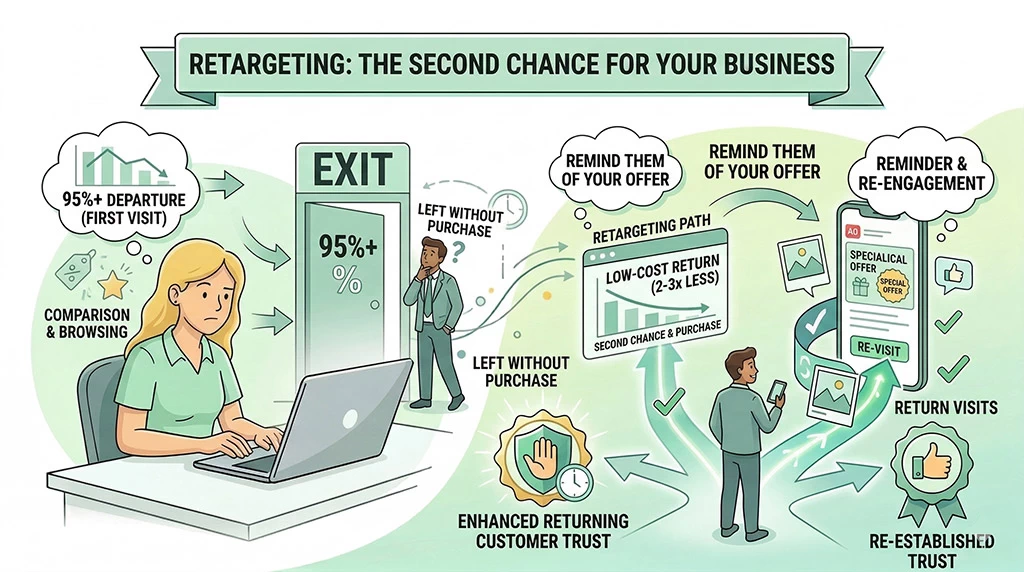
The statistics are relentless: over 95% of visitors leave a site during their first visit without buying anything. This is normal. People compare prices, read reviews, or simply dream. Interesting fact: the cost of bringing back such a visitor is usually 2–3 times lower than acquiring a brand-new one. You have already paid for their first visit, so don’t let that money simply disappear. Retargeting acts as a “second chance” for your business.
2. How the “Magic” of Reminders Works
When a user visits your site, the system places an invisible tag on them. Now, when that person browses news on other resources or watches videos, they see your ad. But a true expert knows: you shouldn’t show the same thing to everyone.
- For those who just viewed the homepage: show the general benefits of your brand.
- For those who abandoned a cart: offer a small discount or free shipping.
- For those who already bought: show related products (e.g., coffee beans for that same coffee machine).
3. Success Analytics: The Numbers Don’t Lie
Data from 2026 shows that properly configured customer win-back campaigns increase overall site conversion by 15–20%. Moreover, people who see reminders are 70% more likely to complete a purchase compared to those you left alone. This happens because your ad appears exactly at the moment the person is ready to make a choice but needs one final “push.”
4. Key Rules of “Polite” Advertising
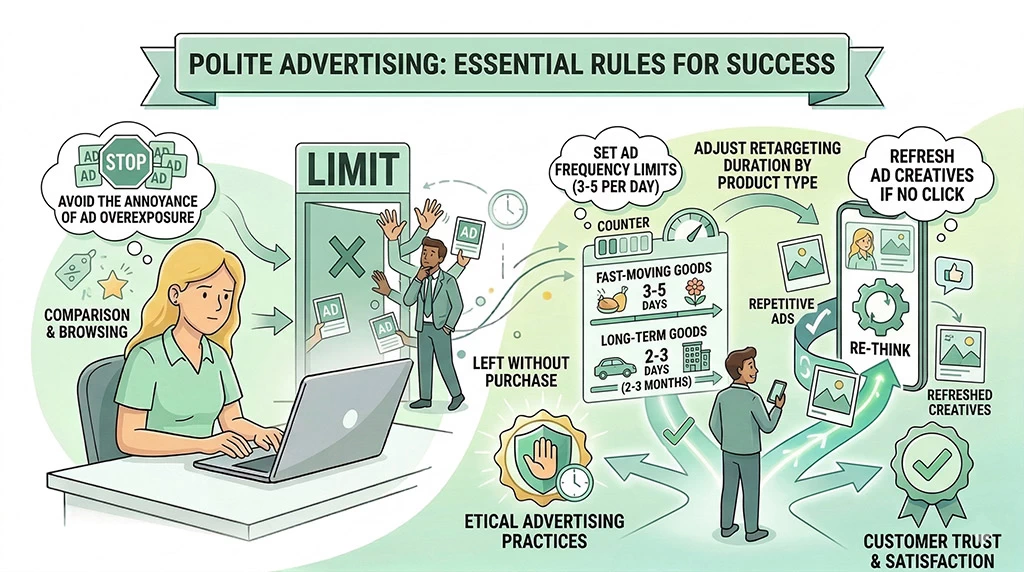
The biggest mistake beginners make is being too intrusive. If your ad “haunts” a person at every step for a month, it causes nothing but irritation.
- Limit the number of impressions: do not show an ad to one person more than 3–5 times a day.
- Monitor the timing: for quick purchases (food, flowers), the reminder should work for a few days. For expensive goods (cars, apartments)—for several months.
- Change the visuals: if a person hasn’t clicked on the ad in a week, change the text or image. Perhaps the previous version simply didn’t “hook” them.
5. The Secret Ingredient: Value Over Calls to Action
Instead of just shouting “Buy!”, give the person a reason to return. “You left a wonderful coffee machine in your cart. We’ve reserved it for you for 24 hours”—sounds much better than dry advertising. Use simple, human language; be helpful and caring.
6. Technical Health and Trust
Ensure that the link in the ad leads exactly to the page the customer was interested in. If they clicked on a photo of sneakers but ended up on the store’s homepage, they will leave again. It is also important for your site to have a secure connection and clear contact information, as retargeting works best where the customer feels safe.
Retargeting in Google Ads is the most effective way to “pick up” money that is literally lying at your feet. It involves working with the warmest audience that already knows about you. Start with a simple reminder for those who put an item in their cart, and you will see your sales begin to grow without increasing your overall advertising budget.


Comments