

When your ads finally start bringing in the first orders, a logical desire arises: “Let’s invest ten times more money to get ten times more profit!” However, in reality, things work a bit differently. Often, with a simple budget increase, the cost of each new customer begins to skyrocket while profits melt away. This is like trying to speed up a car by simply flooring the gas when you are stuck in the mud.
Scaling is not about the amount of money; it is about smart resource management. Let’s explore how to increase sales volume while paying less for each customer.
1. Preparing the Foundation: Don’t Pour Water into a Leaky Bucket
Before increasing ad spend, ensure your website is ready for the influx of people.
- Speed: Analytics show that as you scale, the load on the site increases. If a page starts loading just 2 seconds slower, the customer acquisition cost can rise by 25%.
- Convenience: Check how easy it is to place an order from a mobile device. Most new customers will come specifically from smartphones.
Expert Tip: Fix the errors on your site first, and only then open the “money tap.”
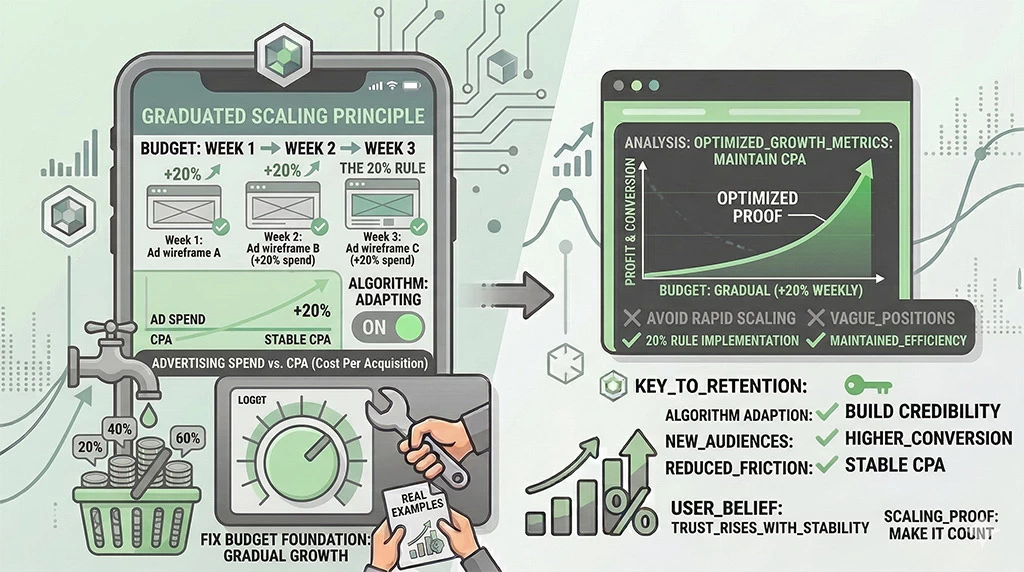
2. Gradual Growth: The 20% Rule
The biggest mistake is doubling the budget in a single day. Modern advertising systems (like Google) operate based on machine learning. A sharp increase in the amount disrupts the algorithm’s settings, and it starts showing ads to everyone indiscriminately, which instantly makes orders more expensive. Interesting fact: The ideal budget growth rate is no more than 20% per week. This allows the system to smoothly adapt and find new people similar to your existing buyers at the same price.
3. Expanding the Audience via Similar Interests
When you have exhausted the narrow circle of “hot” customers who are looking for your product right now, it is time to reach out to those who don’t know about you yet but have similar needs. Use data from your best buyers. Ad systems are capable of finding people with similar behavior. This allows you to access a huge market where competition (and therefore the cost per click) may be lower than in direct search.
4. Working with Those Who Left Without Buying
Scaling is always accompanied by a large number of “visitor-tourists.” They come in, look around, and leave. If you simply forget about them, the cost per lead (application) will go through the roof. Bring them back using soft reminders. A person who has already been to your site is much more likely to make a purchase on the second or third attempt. The cost of re-engagement is usually 3–4 times lower than the first introduction. This is the main secret to lowering the average order price.
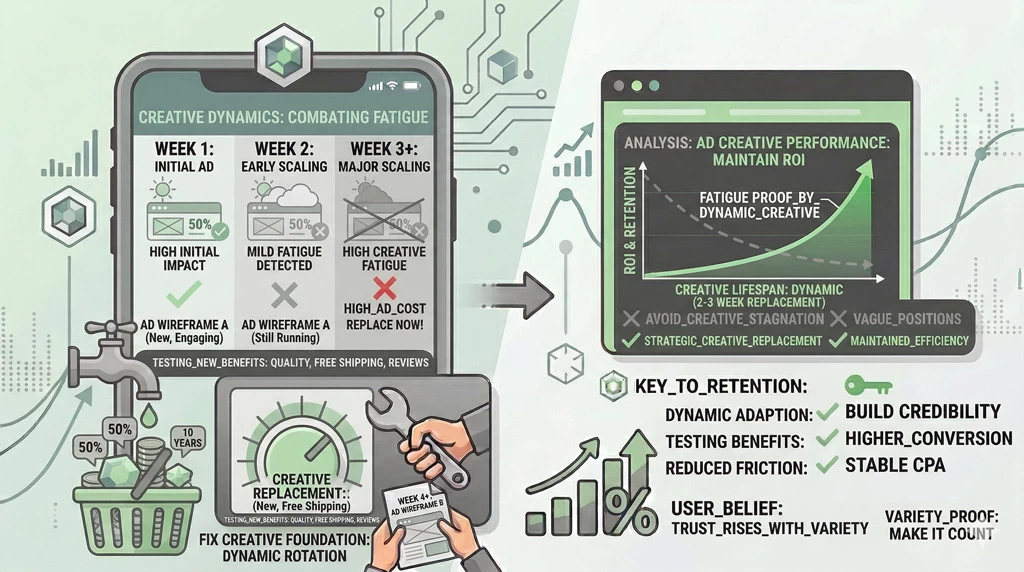
5. Updating Ads: Fighting “Fatigue”
When you show an ad to a large audience, it gets stale. People stop noticing it. Analytics show that after 2–3 weeks of active scaling, the effectiveness of even the best ad starts to decline. To prevent the cost per customer from rising, constantly test new images and headlines. Shift the focus: emphasize quality today, free shipping tomorrow, and real people’s reviews the day after.
6. Analyzing Every Cent Spent
Scaling without numbers is like playing at a casino. You must clearly see which specific keywords or ads are bringing in profit and which ones are simply “eating” the budget. Turn off everything that hasn’t yielded results within a week. Reallocate the freed-up money to the directions that work best. Small savings in each ad add up to a massive reduction in customer acquisition cost.
Scaling is a stress test for your business. If you want to grow without losses, do not rush. Improve your site, bring back visitors, increase spending gradually, and constantly update your offer. Remember: the winner is not the one who spends the most, but the one who knows the price of each customer and knows how to lower it through quality and attention to detail.




Comments