

Every small business owner eventually faces a dilemma: where to invest a limited budget to get customers? On one hand, there is contextual advertising, which promises instant results. On the other, there is Search Engine Optimization (SEO), which feels like a “long game.” It’s like choosing between renting an apartment and building your own house. Both options are valid, but it all depends on your goals and timelines.
In 2026, the battle for customer attention has become even fiercer. To ensure you don’t waste your funds, let’s break down how these tools work and which one will benefit you most right now.
1. Contextual Advertising: A Quick Start, but a Paid Entry
Search advertising is your chance to be in the top spot today. You pay for every click from a user who visits your site.
- Main Advantage: Speed. If you need to sell flowers by March 8th or fill an appointment slot for tomorrow, this is the perfect option.
- Interesting Fact: Over 40% of users don’t even realize they are clicking on an ad if the copy precisely matches their query.
- Risk: As soon as you run out of money in your account, the flow of customers stops instantly. You are dependent on the cost-per-click, which can be very high in popular niches.
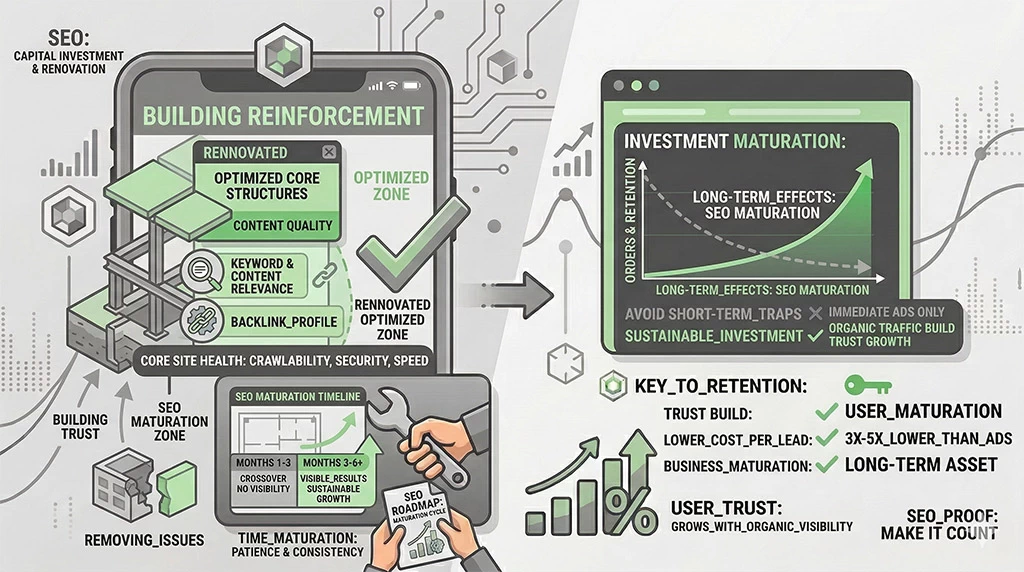
2. Search Engine Optimization (SEO): A Capital Overhaul of Your Business
SEO is the process of improving the quality of your website so that search engines naturally want to show it to people for free.
- Main Advantage: Trust and long-term savings. People subconsciously trust websites that appear in the organic results immediately following the ads.
- Analytics: Over time, the cost of an acquired customer through SEO becomes 3–5 times lower than through advertising. This is an asset that works for you even while you sleep.
- Challenge: Results don’t appear overnight. It typically takes 3 to 6 months of diligent work to see stable growth.
3. What’s Better for Small Business: A Comparison in Figures
Imagine you’ve opened a shoe repair shop. If you launch an ad campaign, you get customers today. This is great for a start. But if you build a high-quality website with helpful tips (how to care for leather, how to choose a sole), people will find you on their own in six months. Small businesses often make the mistake of choosing only one path. In reality, the ideal formula is a combination of both.
4. How to Choose Your Path?
To make a decision, answer these three questions:
- How quickly do I need the money? If you need it “yesterday”—advertising only.
- What is my financial runway? Can I invest in the website for several months without an immediate profit? If yes—start SEO.
- What is the competition? In niches where advertising is too expensive, smart promotion through helpful articles and website usability becomes the only way to survive.
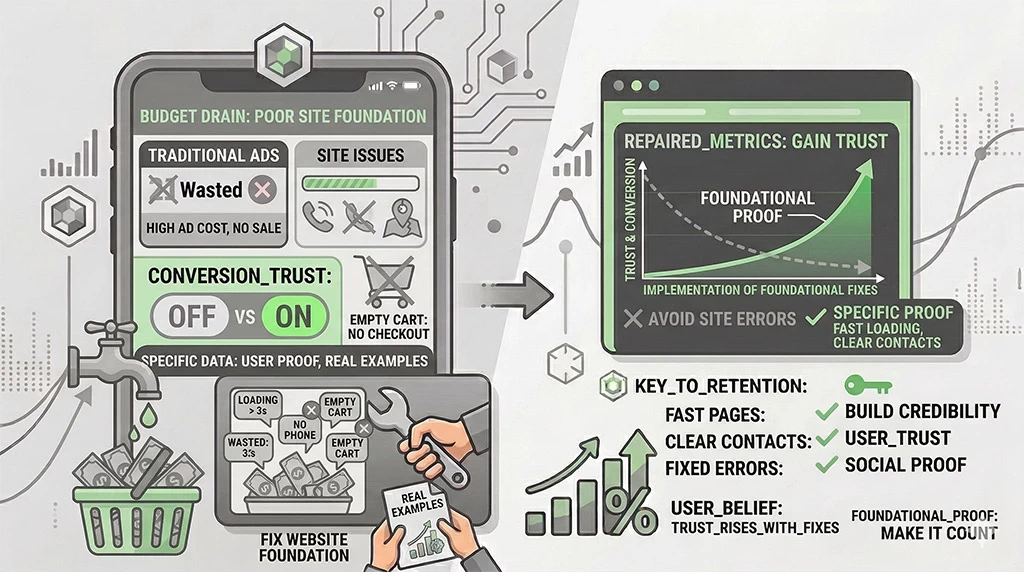
5. The “Empty Basket” Mistake
The worst thing for a small business is to drive a customer via expensive ads to a website that doesn’t work, loads slowly, or lacks a visible phone number. In this case, you are simply gifting your money to Google. Therefore, regardless of your choice, the first step must be getting your website in order.
For small businesses, I usually recommend this strategy: launch ads with small budgets to get your first orders now, and simultaneously lay the foundation through SEO. Over time, as the site begins to climb the search rankings on its own, you can reduce ad spend, turning your resource into a stable source of profit.


Comments