

Imagine you walk up to a store, tug on the door handle, and it doesn’t open. You wait five seconds, ten… What do you do next? Most likely, you turn around and head to the establishment next door. On the Internet, everything happens even faster. Here, the “locked door” is the white screen of your website trying to load.
Today, speed is not just a technical specification. It is the foundation upon which customer trust, your sales, and the favor of search engines are built. Let’s explore why every fraction of a second matters in 2026.
1. Why Does Google Monitor Time So Closely?
The Google search engine has one primary goal—to provide the user with the best answer to their query. The “best answer” is not just useful text, but also comfortable access to it. If a site is slow, Google considers it low-quality. Interesting Fact: Search crawlers have a limited “time budget” to check your site. If pages load slowly, the bot only manages to crawl a small portion of your resource. As a result, your new products or articles might not appear in search results for weeks simply because the system didn’t have time to “see” them.
2. The Psychology of Waiting: How Much Patience Does a Customer Have?
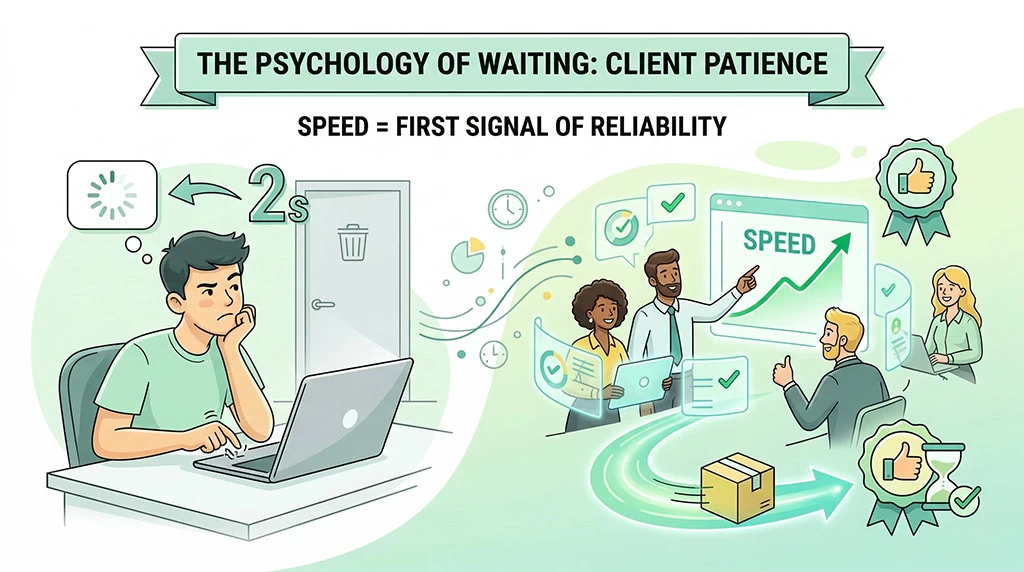
The modern user is spoiled by speed. Analytics show that if a site takes longer than 2 seconds to load, over 40% of visitors close the tab before the first image even appears.
What happens in a person’s mind? Slow loading is subconsciously associated with low service quality. If a company cannot set up its own website, will it be able to deliver goods on time or provide quality service? Speed is the first signal of your reliability.
3. Speed and Conversion: The Math of Profit
The connection between load time and sales is pure mathematics. Well-known studies from major marketplaces show that speeding up a site by just 0.1 seconds increases the number of orders by 8–10%.
- Slow Site: You spend 1,000 UAH on advertising, bring in 100 people, but 60 of them leave because they didn’t wait for it to load. You have lost money.
- Fast Site: The same 1,000 UAH brings you 60% more potential buyers for the exact same cost.
Speed optimization is the cheapest way to increase profit without expanding your advertising budget.
4. Mobile Internet: A High-Risk Zone
Most people today access websites via mobile internet, which isn’t always stable. If your site loads in a second on a home computer, that time can stretch to ten seconds while on the go.
A true expert always checks speed specifically for mobile devices. Heavy photos, complex scripts, and unnecessary animations are the primary “killers” of mobile traffic. Make your site lightweight, and your customers will thank you.
5. How to Check Your Site and What to Do About It?
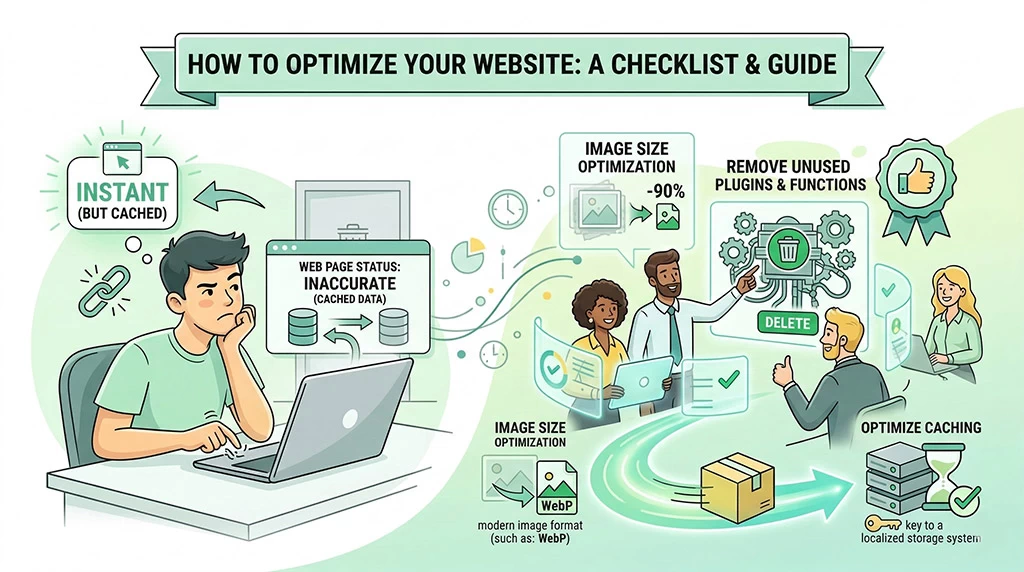
Do not trust your own sensations, as your browser often stores a copy of the site in its cache and opens it instantly. Use special testing tools (such as the official service from Google). It will show you the real picture and provide a list of recommendations.
Common steps for acceleration:
- Reducing Image Size: Modern formats allow you to maintain quality with a file weight 10 times smaller.
- Discarding the Unnecessary: Remove plugins and features that no one uses.
- Setting Up Caching: So that the site opens instantly upon a repeat visit.
6. Behavioral Factors: A Signal for Ranking
When a person enters a site and immediately closes it due to slowness, the search engine receives a signal: “This site is uninteresting or broken.” The more such bounces occur, the lower your resource drops in the search results. Speed directly affects how long a person stays with you, how many pages they view, and whether they return.
In 2026, site speed is not a luxury, but a matter of your business’s survival online. It is the key that opens the door to high search rankings and customer loyalty. Start small—lighten your pages, and you will see how people’s trust and your sales figures grow. Remember: the customer won’t wait; they will simply click on the next link.


Comments